
The EDCH advocates
Meet our EDCH Advocates!
A diverse group of committed professionals — librarians, editors, researchers, and community builders — working together to strengthen the Diamond Open Access (OA) ecosystem across Europe.
Coordinated by the EDCH Community Task Force, they serve as key links between the EDCH and their professional communities— promoting initiatives, collaboration, and supporting the growth of sustainable, equitable, scholar-led publishing.

Its mission is to professionalize the field of Diamond Open Access by being the central knowledge hub that connects and creates resources and events for editors, researchers, institutional publishers and service providers, librarians, policymakers and funders in the Netherlands.
The Team
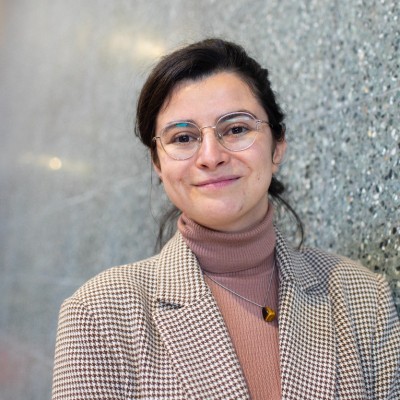
Maria Constantin
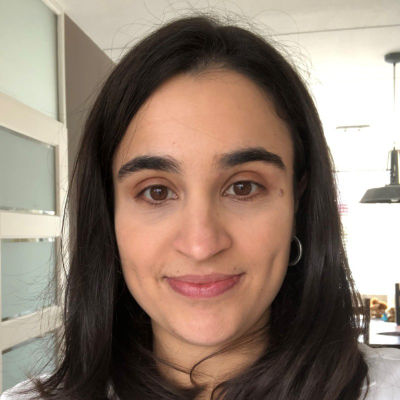
Juliana Costa

Femke Howlwerda
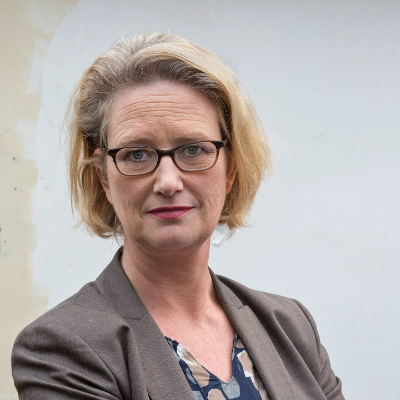
Bregt Lameris

Barbara Hissa received her Bachelor's degree in Physics and her Master's and PhD in Cell Biology from the Universidade Federal de Minas Gerais (UFMG), Brazil. Following her doctoral studies, she did a five-year postdoc at the University of Chicago, where she expanded her knowledge and research interests in the field of Biological Physics/Biophysics. She later worked in Mannheim, Germany, as a Lab Deputy Head, gaining experience in international scientific environments and leadership.
In 2020, Barbara joined the Beilstein-Institut as a Scientific Editor. The following year, she became Managing Editor of the Beilstein Journal of Nanotechnology (BJNANO). In this role, she is responsible for overseeing the editorial process, building networks within the scientific community, managing, supporting and growing the editorial board, and promoting the high-quality published research in BJNANO with the aim of increasing the readership and visibility of the authors and of the journal.
Barbara started as an advocate for the EDCH in September 2025. One of her main goals in this position is to build stronger connections between researchers in STEM fields and the diamond open access movement. Her target is to promote this inclusive and equitable publishing model, making scientific knowledge more widely accessible to both researchers and the broader community.
Barbara’s current interests include: research integrity, research inclusion and diversity, diamond open access model, research assessment, nanotechnology, nanoscience, science communication. Through her career, Barbara combines her scientific background with her commitment to advancing open, ethical, and inclusive research practices. She continues to work toward bridging communities, strengthening scholarly communication, and fostering a more equitable scientific/publishing ecosystem.
The Diamond OA landscape in my community (international STEM researchers working on fields which include physics, chemistry, biology/medicine, materials science, engineering), is developing, but a lot of work needs to be put into building trust from the community to opt for this publishing model rather than for current commercial OA models. Efforts that have been done to strengthen Diamond OA in Germany (where I am currently located) include building the Servicestelle Diamond Open Access (SeDOA), partnerships between DFG and DOAJ (which in part also involves seDOA), and efforts being done by the Beilstein-Institut.
Among the STEM community I think it is really building trust. Most researchers working on STEM fields in Europe are under pressure to publish in high impact factor journals, which are usually commercial. Some think that Diamond OA is not sustainable or that it could end at any minute. It is nice to show them updated information (including numbers, statistics, graphs, institutions and funding agencies that are behind Diamond OA journals) to really convince them that Diamond OA is the best choice and it is here to stay, as long as the community uses it.
I hope that the connection between Diamond OA initiatives is strengthened, that more librarians recommend researchers to publish in Diamond OA journals, that scientists start or continue supporting and trusting Diamond OA journals with their best works so we could strengthen our reputation and visibility. Also, it would be amazing if there is a stronger connection between funding agencies and Diamond OA initiatives (through CoARA, DORA, etc.) so they could increase their support to Diamond OA by for example putting a cap on APCs (NIH) or not funding APCs at all (like the The Gates Foundation’s with their Open Access Policy refresh). I do see a lot of incentive to preprints but not really directly to Diamond OA.

Remedios Melero holds a PhD in Chemistry from the University of Valencia, and works as researcher at the Institute of Agrochemistry and Food Technology of the CSIC (Spanish National Research Country). She is a member of the scientific committees of Redalyc and Scielo España. Associate editor and member of the advisor board of DOAJ and coordinator of the Commission on Intellectual Property of Amelica. Advisor of some committees linked to open science of the Spanish National Science Foundation (Fecyt). She is member of the Spanish research working group OpenScienceSpain. She has participated since 2005 in national projects related to open science in Spain, and three European projects: NECOBELAC, FOSTER and FOSTER Plus, all of them directly related to all aspects that affect open science and how to contribute to its implementation through training and promotion of open knowledge. Their research topics are open access to publications, open access policies, institutional repositories, author rights and copyright, and research data management.
Most Spanish academic journals that are under the umbrella of public institutions are diamond journals, which are published with OJS and use different CC licences. Fecyt, a partner of DIAMAS, has contributed to the creation of DOAS, which is being disseminated among different lists and publishing initiatives. In general, universities and research entities are aware of open access benefits, and academic presses contribute to increase editorial quality of their journals. Dulcinea directory list nearly 2000 alive journals and its characteristics based on open access features.
- Gain greater recognition within the scholarly community.
- Enhance journal quality standards.
- Strengthen visibility and transparency.
I hope they can be recognised by the research community as a mean as good as any other that they consider "international," and they can be mentioned in research assements exercises criteria as preference venues for publishing.

Anna works as an information specialist at Tampere University Library. Her areas of expertise include Open Access publishing and research evaluation. She works with Tampere University Press, a Diamond OA book publisher originally established in 1994 and fully Open Access since 2016. She has contributed to the development of Open Science policies and actions within her own organization as well as in national working groups and is keen to promote multilingualism and diversity in scholarly publishing.
According to a study conducted in 2020, the majority of peer-reviewed journals published in Finland are diamond open access. There are state subsidies for the publication activities of learned societies, including grants for low-income diamond open access journals. This must be applied for, and is not available to all publishers. Probably the most important infrastructures are the publishing platforms Journal.fi (OJS) and Edition.fi (OMP) provided by the Federation of Finnish Learned Societies and funded by the Ministry of Education and Culture.
- Uncertainty of funding, high proportion of volunteer work, fragmentation of the landscape and professional skills.
- Grants or funding for diamond open access book publishers do not exist.
- Legacy publishers are favored over non-profit open access publishers when universities allocate funding.
- To secure permanent funding through an administratively light operating model and to increase cooperation and collaborative learning.
- Using the publication channels' reputation as proxy for quality should became a thing of the past.

Danny is a librarian with a strong background in Open Access and Open Research, having worked at University College London, Imperial College London, University of Hertfordshire, and currently the Royal Veterinary College (RVC). His role at the RVC is in support of the UK Reproducibility Network’s (UKRN) Open Research Programme, so his time is split between local and national efforts to support Open Research and foster a more positive research culture. He has also previously worked for the UK library consortium Jisc, on the project to support the implementation of the UKRI Open Access policy.
Lots of good work has been done by my former colleagues at Jisc, especially in support of international Diamond OA endeavours (not least DIAMAS). In the UK we also have a growing number of OA institutional presses, though not all of them are Diamond. In my opinion, the UK has been slow to adopt Diamond OA at scale because it was not (until recently) a financial necessity; we could always afford to pay APCs and Transformative Agreement fees, so we just did (although many of us OA advocates protested).
Research(er) assessment. We can develop the infrastructure, expertise, and funding required for Diamond OA but if researchers are still being evaluated (or even only still think they are) based on where they publish and associated metrics such as Journal Impact Factor, they will continue trying to publish in the same old "high impact" journals rather than seeking out Diamond OA alternatives.
In the short term, I hope that research funders and institutions in the UK will stop paying for OA via APCs and Transformative Agreements and invest that money in Diamond OA instead. Further forward, I hope that the academic journal ceases to exist, with all research outputs (articles, data, materials, software, etc.) published on OA platforms and then curated accordingly, with the outputs themselves, rather than the publication platform, being evaluated on their own merits.

Dr. Ramazan Turgut is an expert in open-access publishing, holding a PhD in Humanities and possessing extensive international experience in scholarly communication, metadata strategy, and global publishing infrastructures. He is Managing Editor of the Directory of Open Access Journals (DOAJ) and serves as Türkiye Ambassador for both the Directory of Open Access Books (DOAB) and Crossref. His work bridges academic research with policy and infrastructure, focusing on equitable, transparent, and multilingual access to knowledge.
In Türkiye, Diamond OA is effectively the default. Roughly 95% of OA journals operate without APCs, largely because most titles are university society-owned and hosted on DergiPark, with national support from TÜBİTAK-ULAKBİM. TR Dizin audits journals against editorial and ethical criteria aligned with good practice, and Aperta Türkiye supports data sharing and long-term access. Editors and librarians collaborate through templates, training, and shared infrastructure. DOAJ, DergiPark, and university libraries co-run hands-on workshops covering licensing, copyright, peer review transparency, endogeny monitoring, and metadata quality. The result is a public service stack that lowers costs, standardizes workflows, and makes policy signals visible across thousands of titles.
The core challenges are sustaining funding and staffing for largely volunteer editorial teams, strengthening technical capacity for production (including JATS XML, DOI good practice, and preservation services), and ensuring clear, consistent policies on open access, licensing, and copyright—especially ownership versus transfer—both on journal sites and at the article level. Quality assurance also needs closer attention, with better monitoring of endogeny and realistic review timelines. Finally, journals should raise visibility and interoperability through multilingual metadata and open references, while phasing out misleading metrics and so-called “non-standard” indexes that still appear on some pages.
- A national Diamond OA framework that secures recurring public funding for editorial services.
- Shared services for XML production, copy-editing, DOI registration, and preservation across DergiPark, TR Dizin, and university libraries.
- Routine self-audits against DOAJ criteria, including dashboards for endogeny and submission-to-acceptance times.
- Wider adoption of multilingual metadata and open citations to improve global discovery.
- Institutionalized editor training so quality and transparency improve year on year.